Preferences of a client about the website’s design
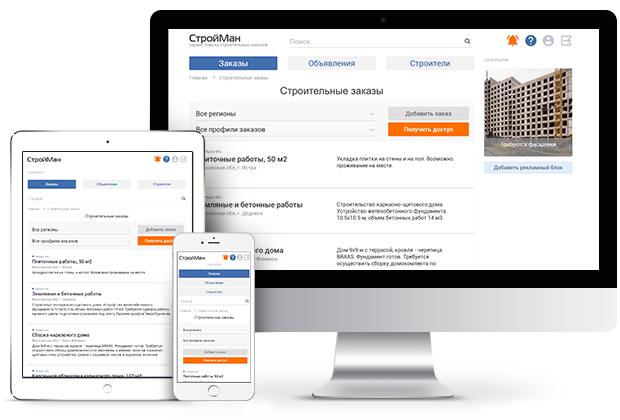
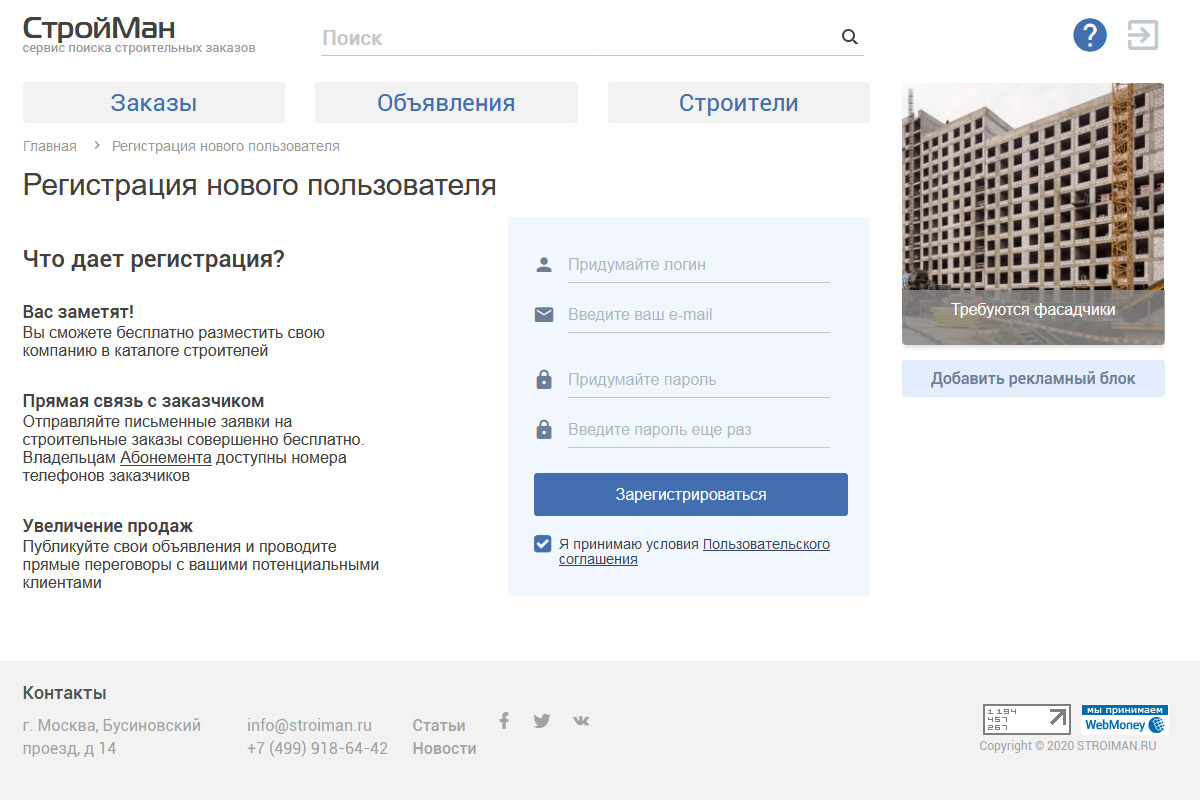
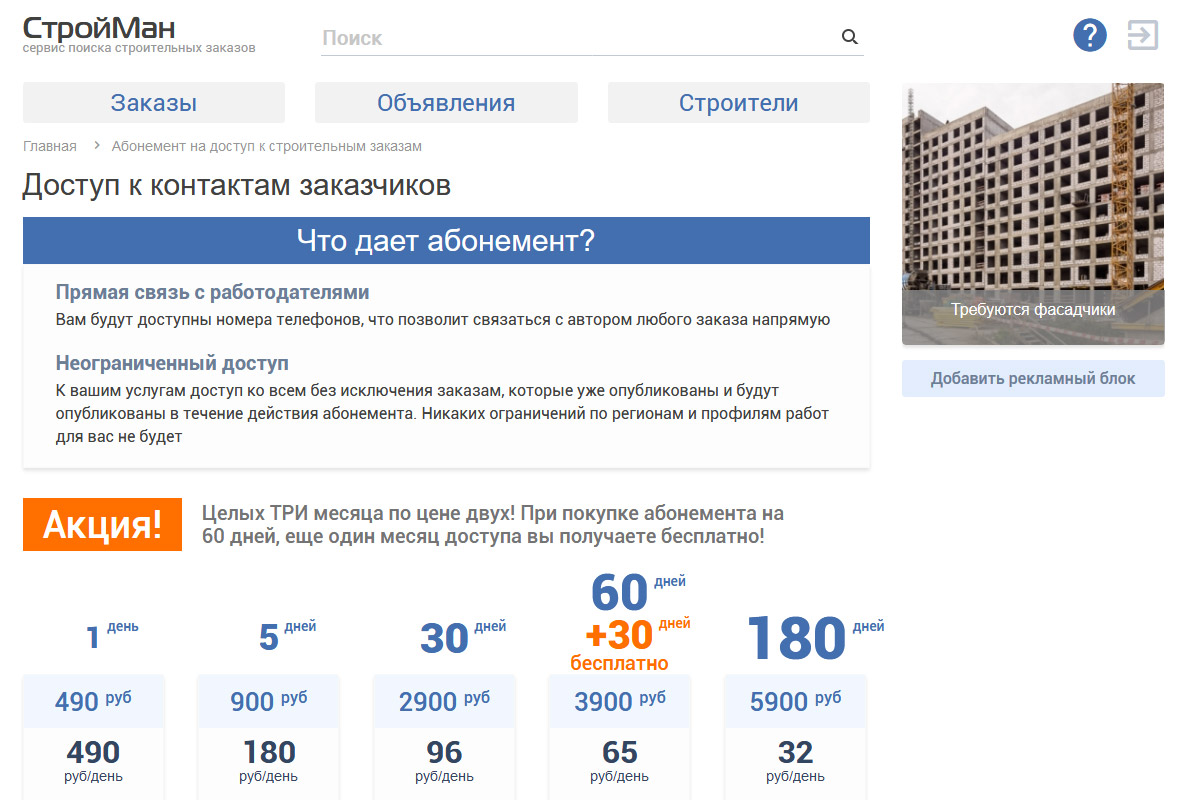
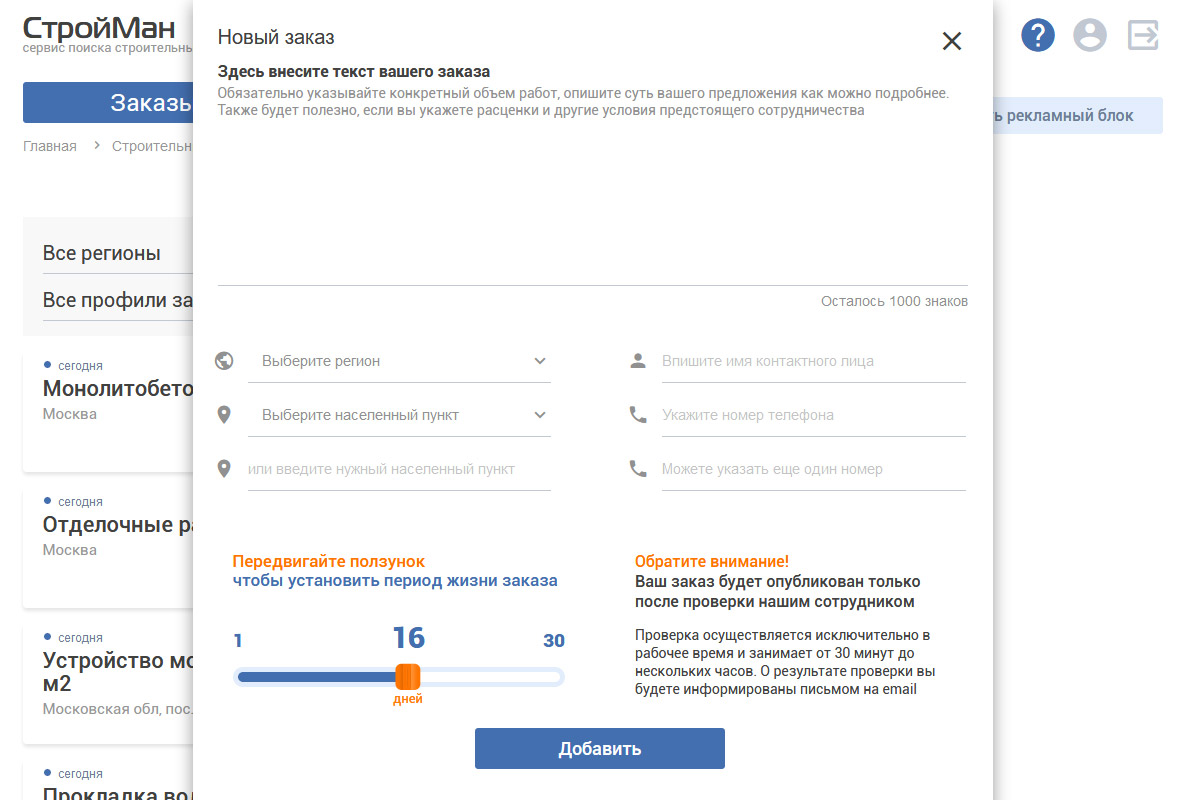
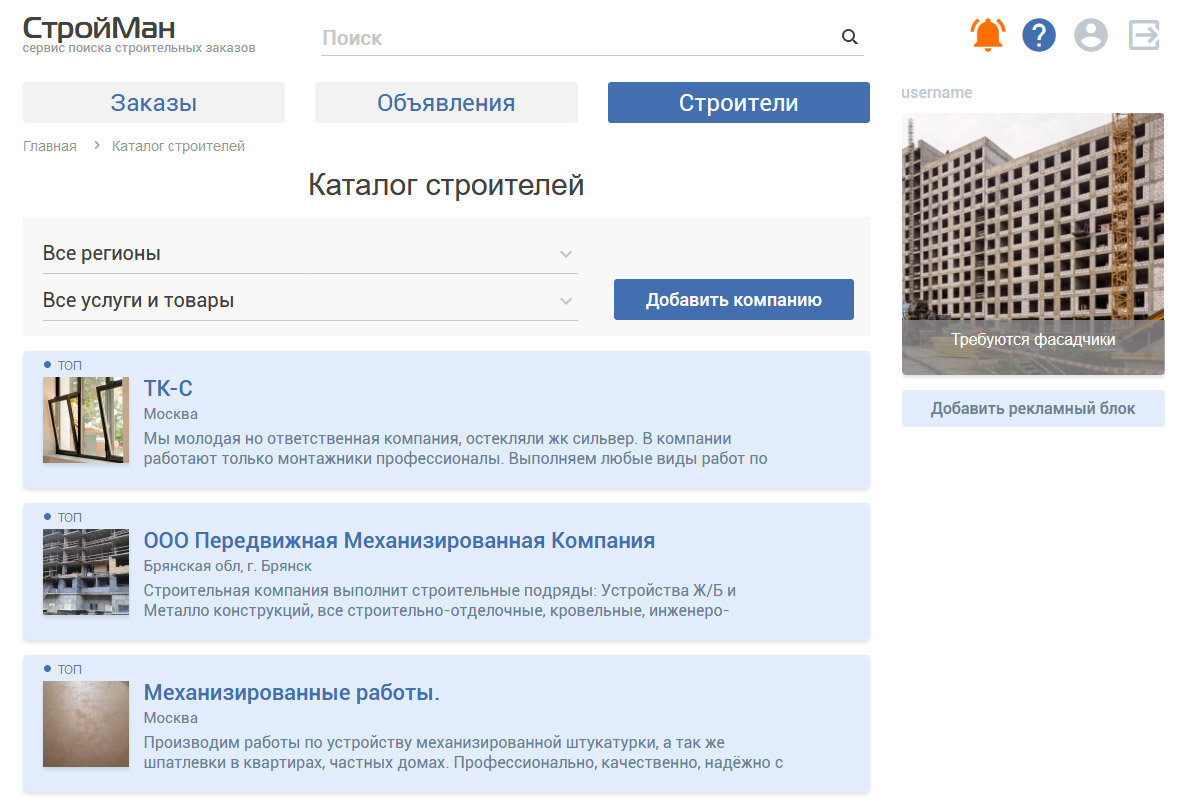
To make large buttons, use no monograms or whimsical fonts. Intuitively understood, fairly large graphical elements.
During the layout work, we had to keep three main moments in mind:
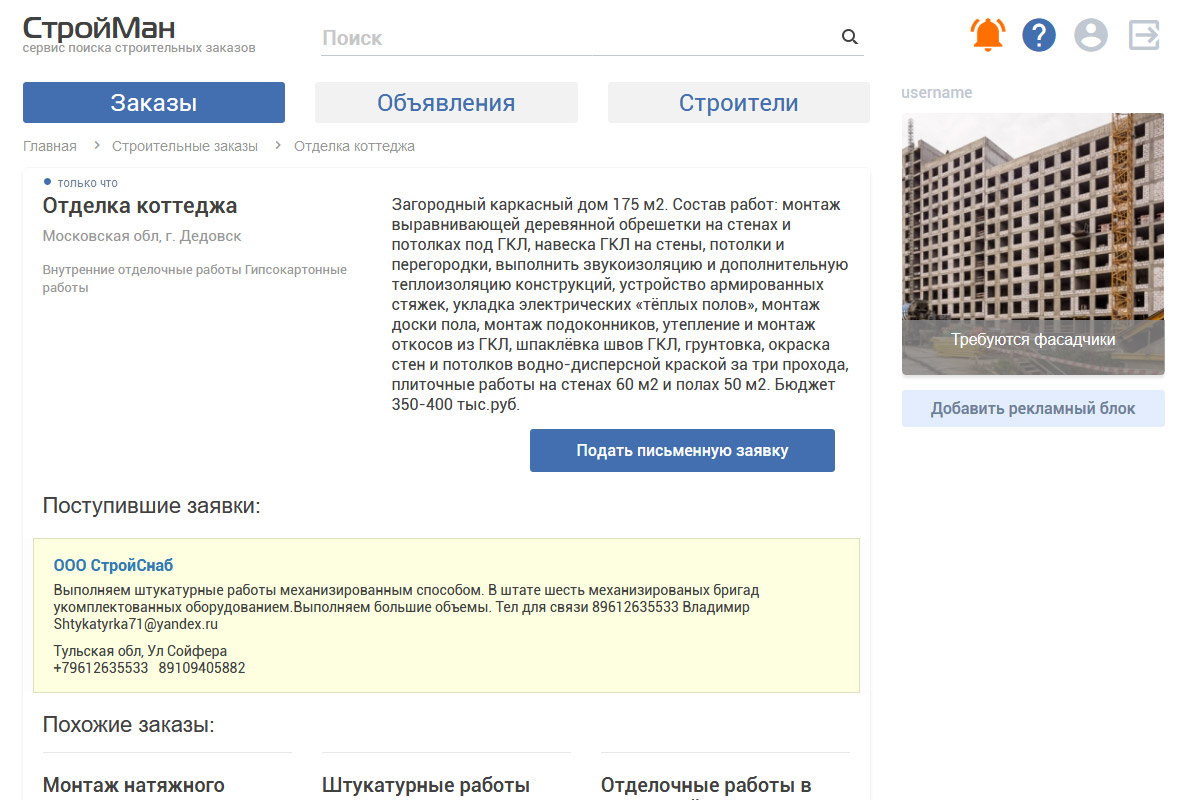
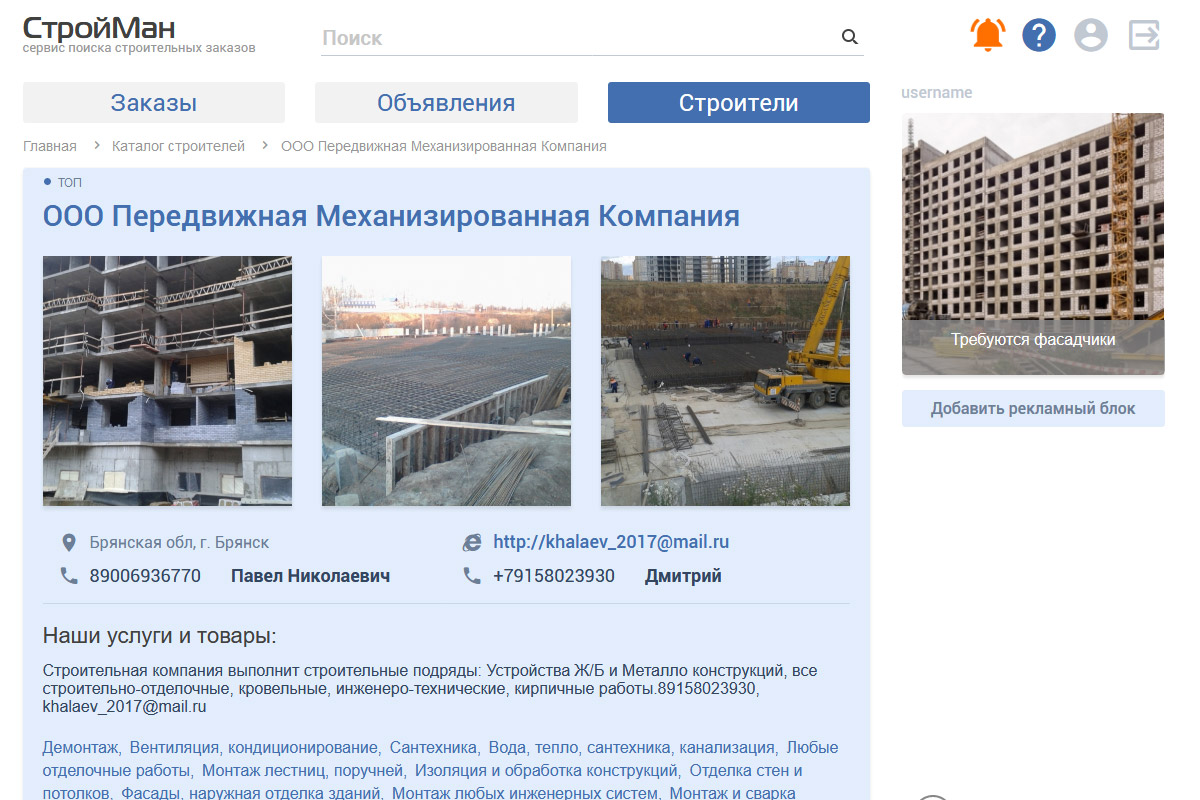
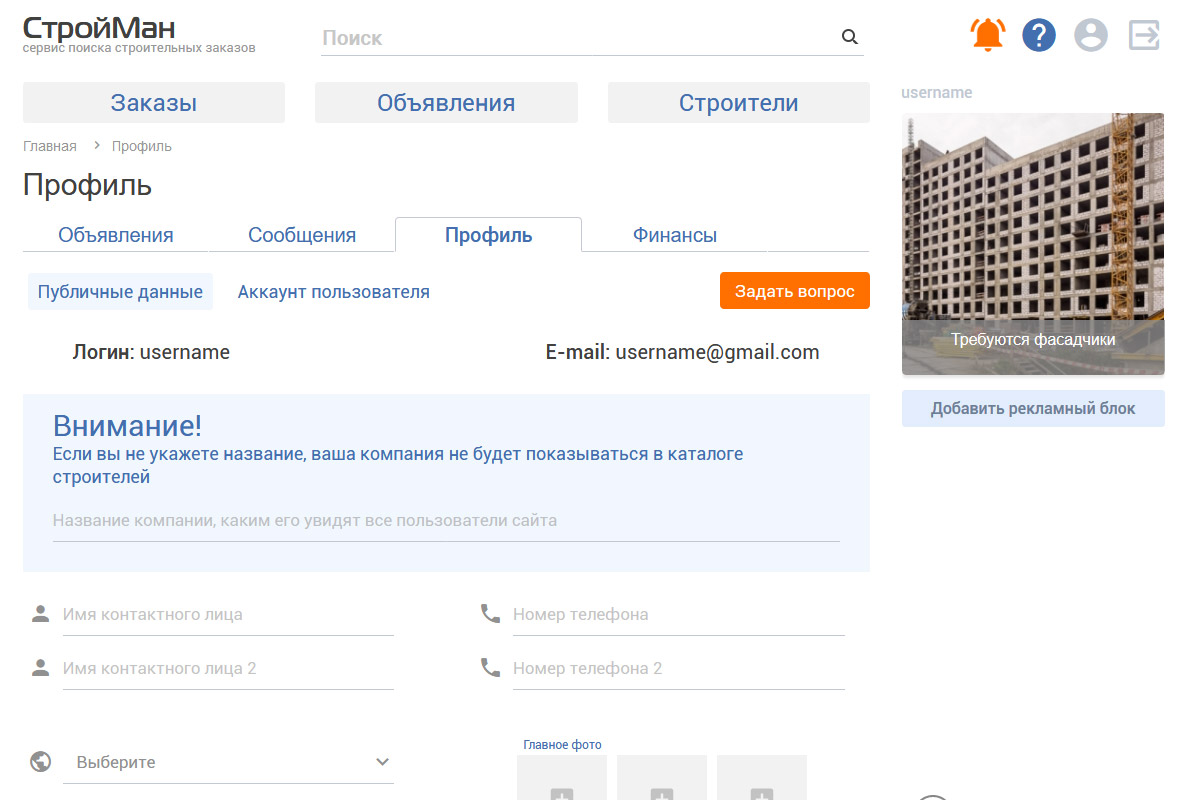
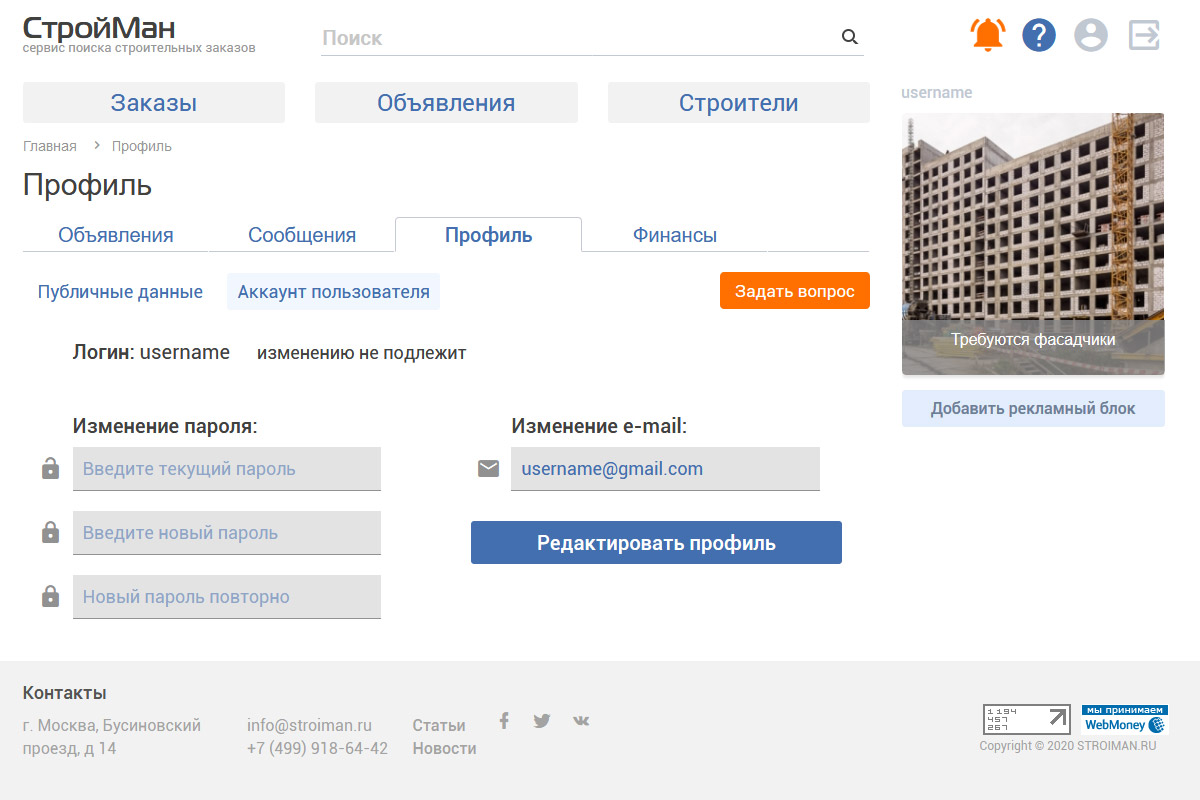
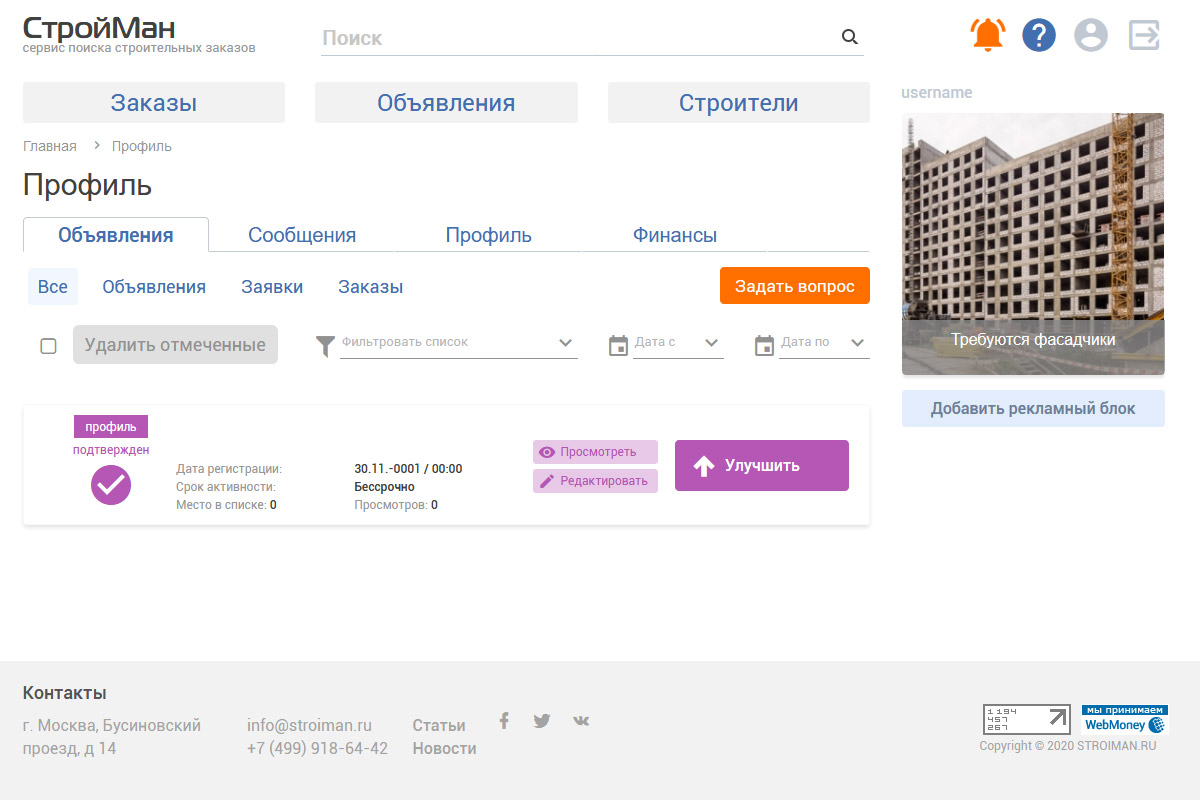
a) A principle of a notepad where all 5 main chapters of the website (on top) as if situated on separate pages of a notepad.
b) Placement of links and objects.
c) Three blocks: a central area shall stretch to the screen width but the left and right through sidebars shall not stretch.
Terms of reference
The first website version had such sections developed:
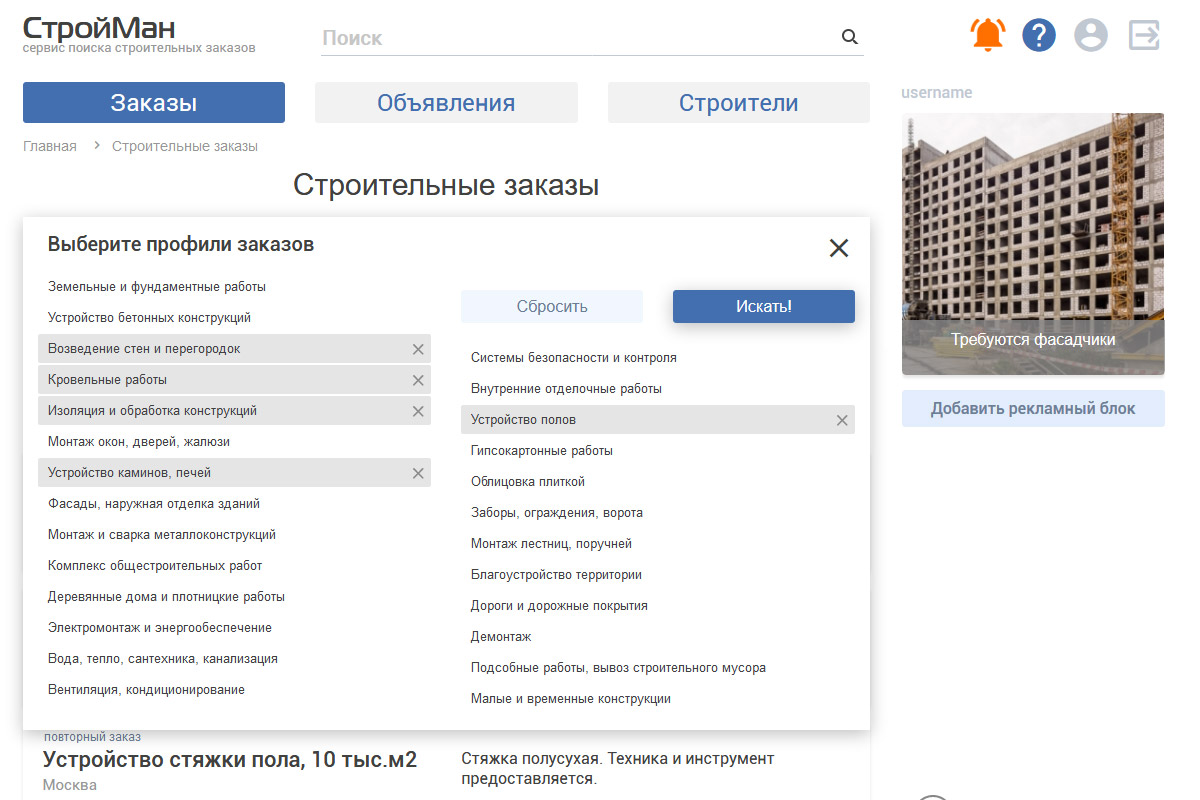
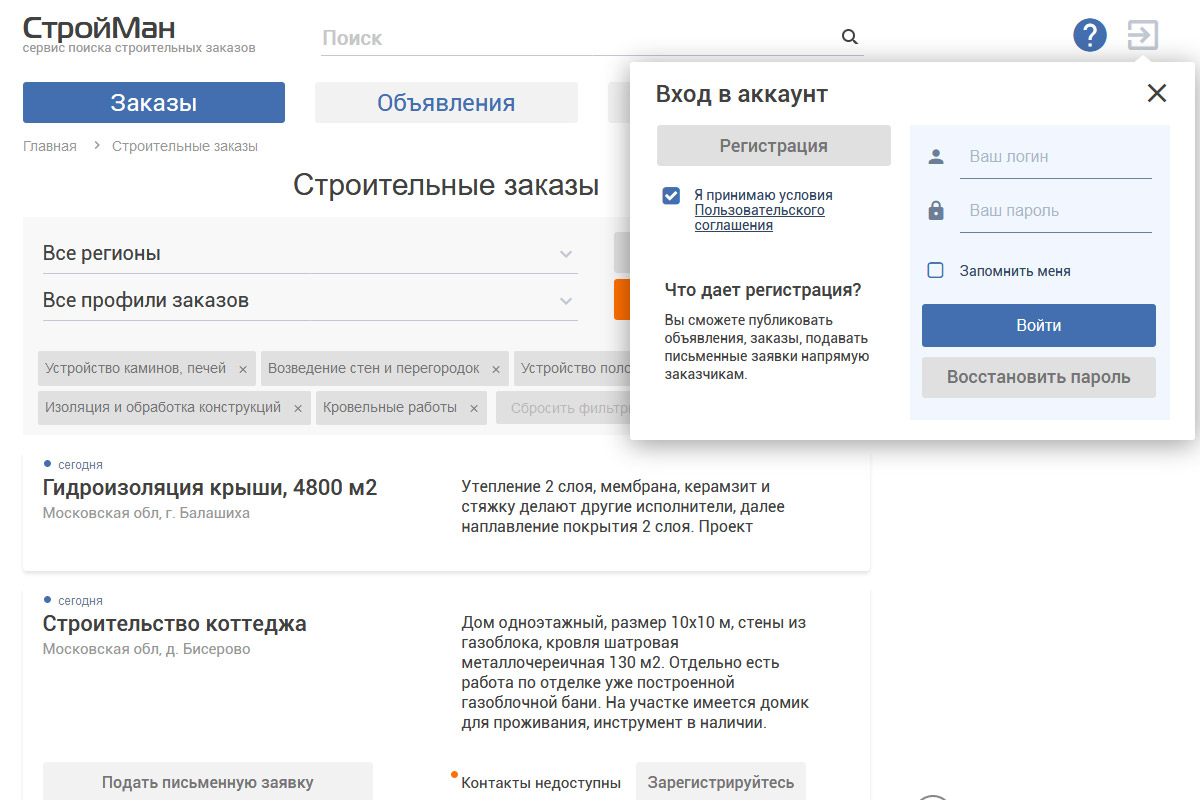
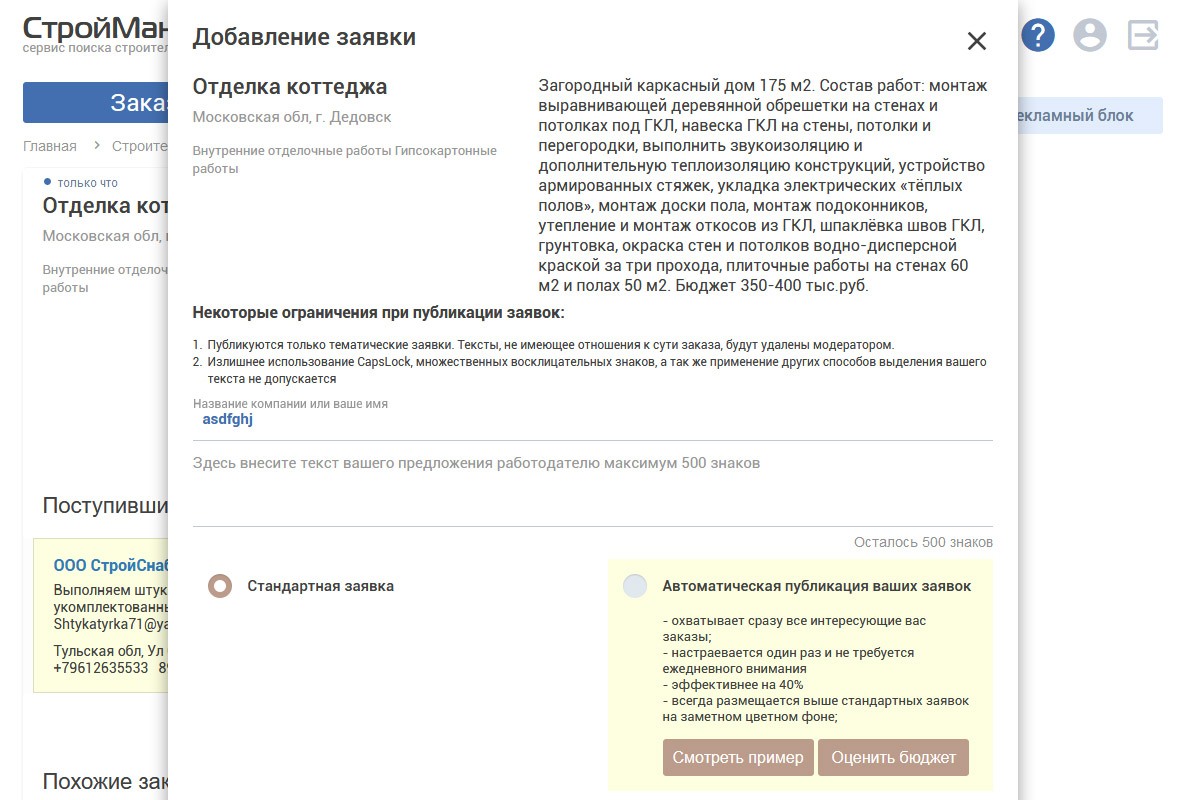
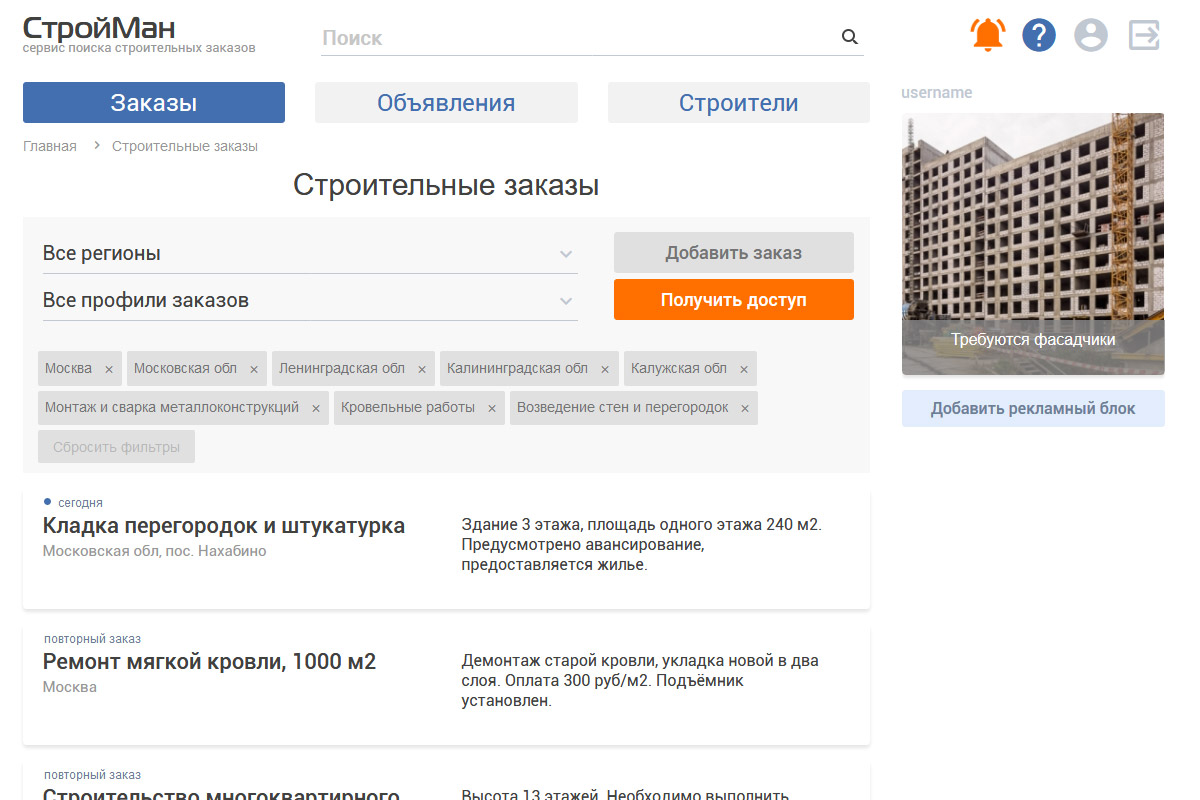
- Order. A list of orders for construction workers, which are added by a moderator of the website or partners. Depicting a building card with a possibility to comment. Contacts are only shown to the users, which have paid using SMS or bought a package of services.
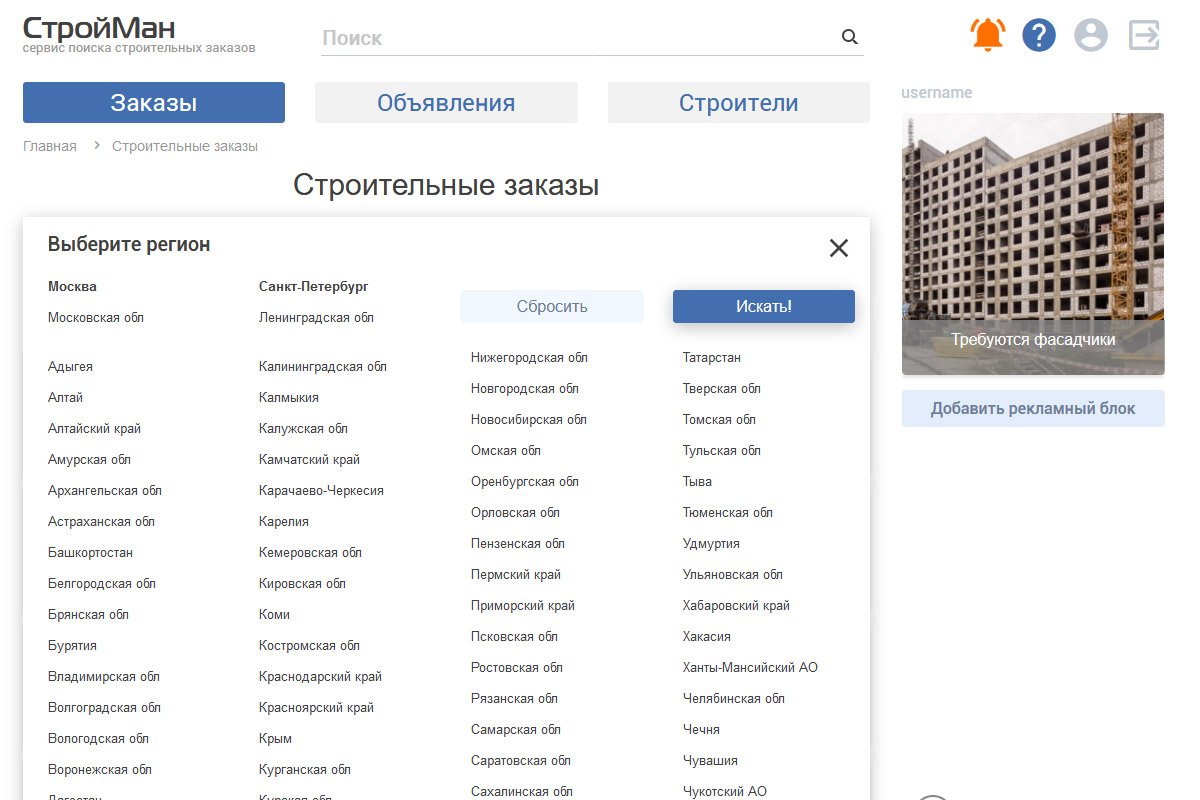
- Housing for construction workers. That’s analogical to the section of construction but the information can be added by not only moderator but also visitors of the website. A block with the search that has a filter by type of housing, the number of available places, and the presence of power.
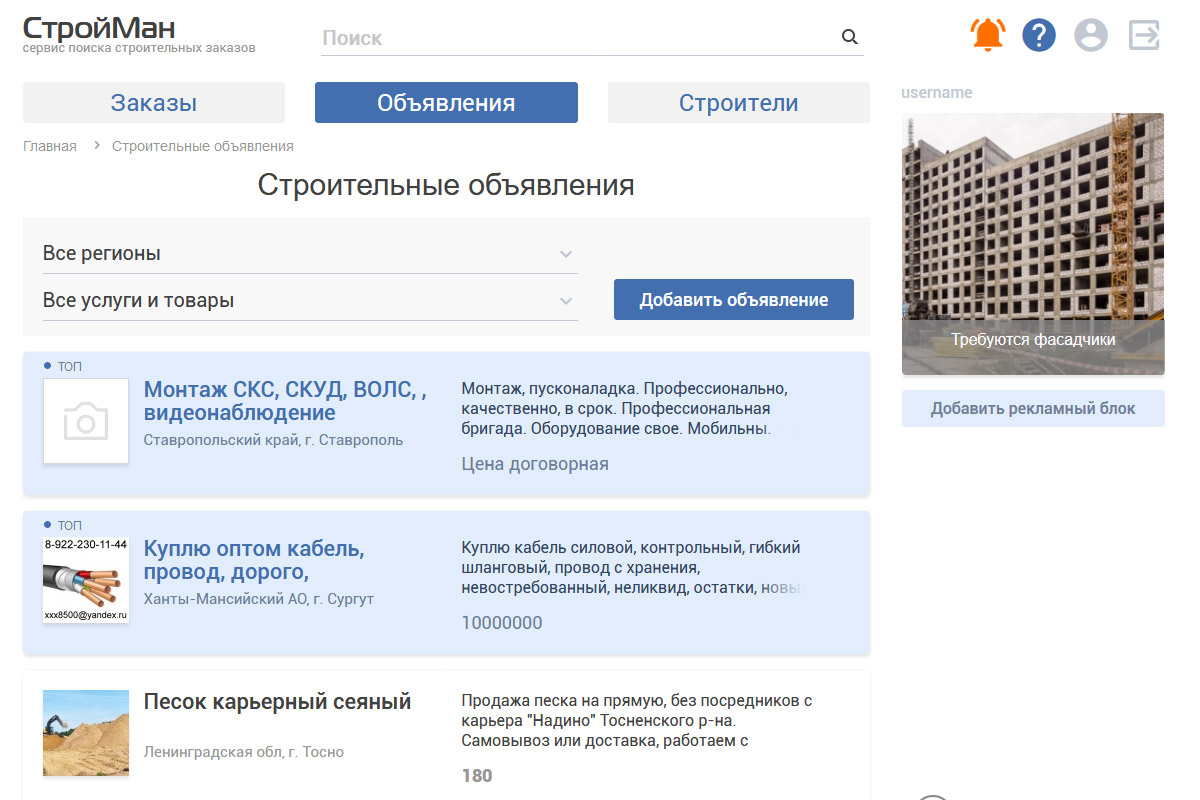
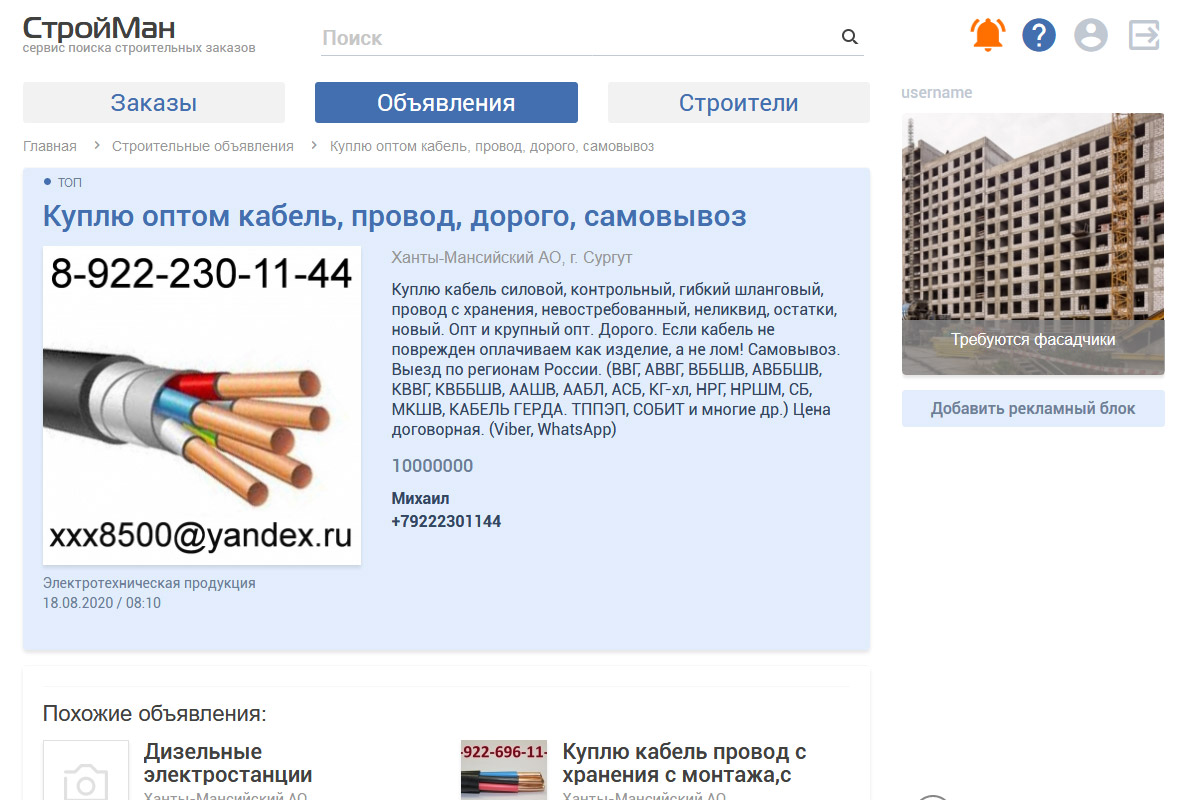
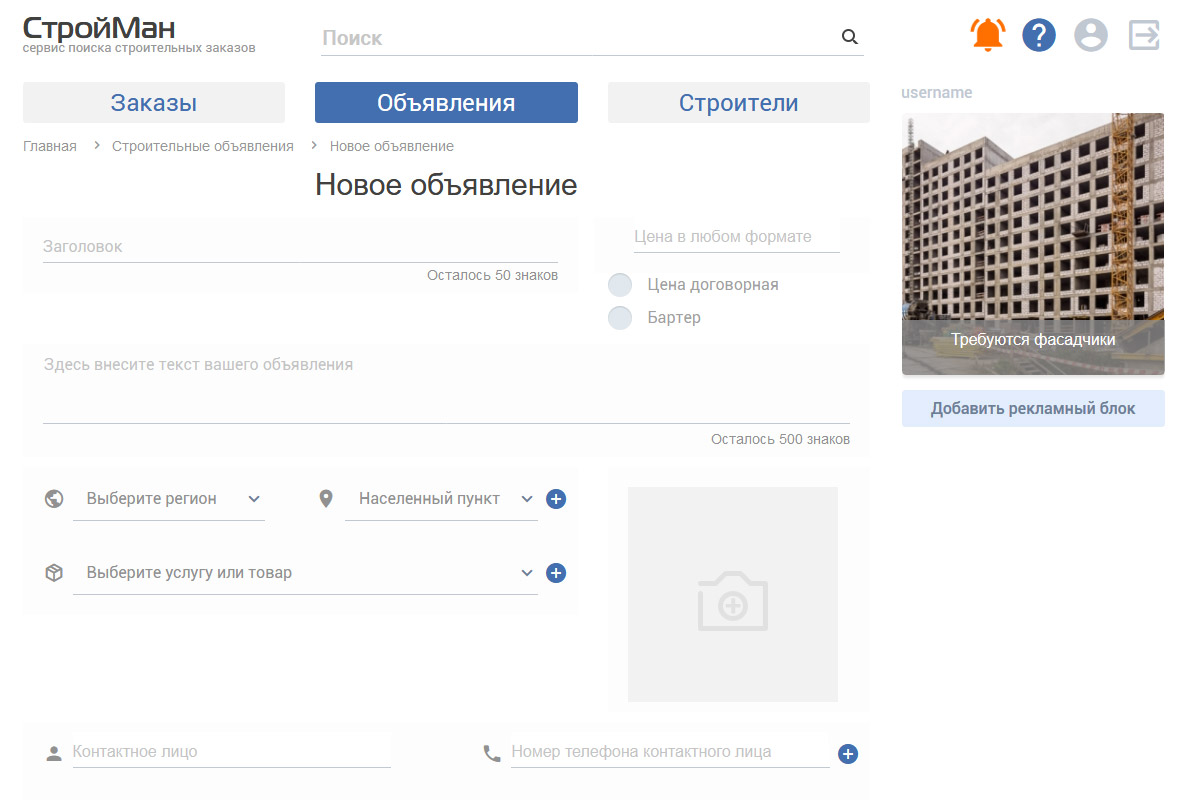
- Announcements. Registered users can add announcements to one of the rubrics, indicating a region and contact data. Viewing the contact data here, unlike in the ‘Order’ section, is free of charge. Extra functionality was added to make it possible to raise the ad to the top of the list.
- A library of a construction worker. This section presupposes joining the partner program of one of the websites, which gave its specifications. The website only shows a list of sources, specific information, and purchase — after getting onto the website of the owner of electronic documents.
- Job offers in the construction area. Companies in their accounts are able to add information about open vacancies. Viewing contact data here is free of charge.
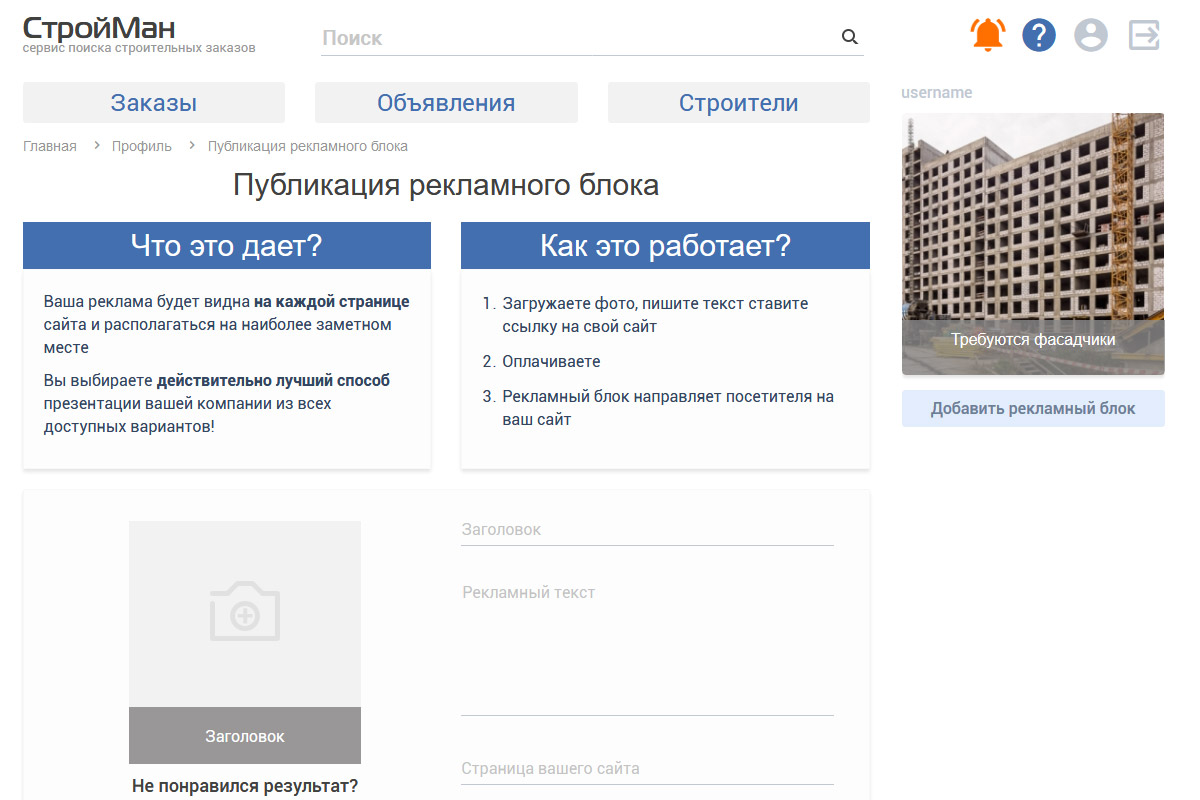
- Ad blocks. Factually, it is teaser advertising (a picture, a heading, and a text) with the pay per click. It is possible to stop displaying ad blocks.
- User balance. For the convenience of users, several options of account balance replenishment were realized via payment systems, for instance, Robokassa.
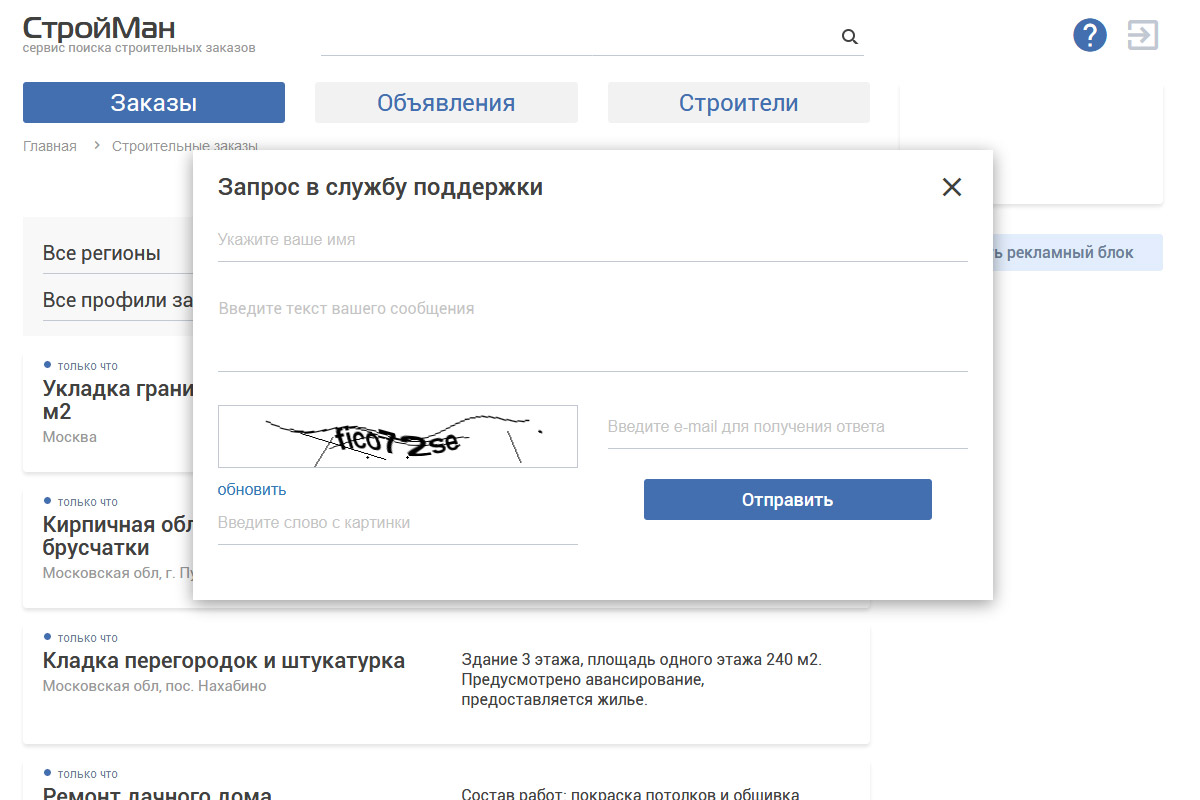
- Ticket system. When users of the website communicate with the administration, all messages are copied to an email. The ticket history is preserved.
The administration system is developed for the entire website, with the separated access rights. The website administrator can add any number of moderatos, assigning to each of them their own access rights. The admin part of the website has the possibility to make emails to all registered users, as well as to send messages to the visitors (the schedule of the display of the messages is adjustable).
The website has over 50 scripts of emails, depending on the type of event: for instance, insufficient balance, the advertising publication term is expected to expire, a new comment on the published ad was added, and other events.
For the convenience of a moderator, the admin panel has a count for the number of all construction units, showing new ones (since the last visit), and the activity stats for every user.
The project is aimed at the users of one country (regions of one country; all transactions are made in one currency, and so on). The entire functionality of the website is developed in a way so as to make it easy to transfer it to another domain, which would be for a different country.
Improvements to the website
The first version of the website was developed using ZendFramework and a regular bootstrap layout.
5 years after the project was finished, the client asked to implement everything using Node.js and Angular.

Additional developments:
- Documents, inspections. Announcements of companies about consulting services in areas of paperwork, conducting various inspections, etc.
- Discounts to construction workers. A store or a construction company publishes its offer to the construction experts. This section can be added with goods that have a description, a type of an established discount, the period of action, and the volume of the discount.
- Editing objects. In the first version of the website, the entire information could be edited only by the website’s moderator. Now, a possibility was developed to edit the data by a regular user account (of buildings, ads, vacancies, etc.)
- LiqPay payment system. Now, users could pay for the website services using their bank cards.